
Commercial Indoor Playground Equipment
What Makes a Good Commercial Indoor Playground Structure?
The worst way to buy an indoor playground is to start with a catalog.
A catalog can show slides, bridges, tunnels, crawl tubes, ball features, and themed panels. It cannot tell you whether the structure belongs in your building, whether parents will be able to see their children, whether party traffic will choke the entrance, whether the toddler zone is in the wrong place, or whether your staff will be able to supervise the space on a busy Saturday.
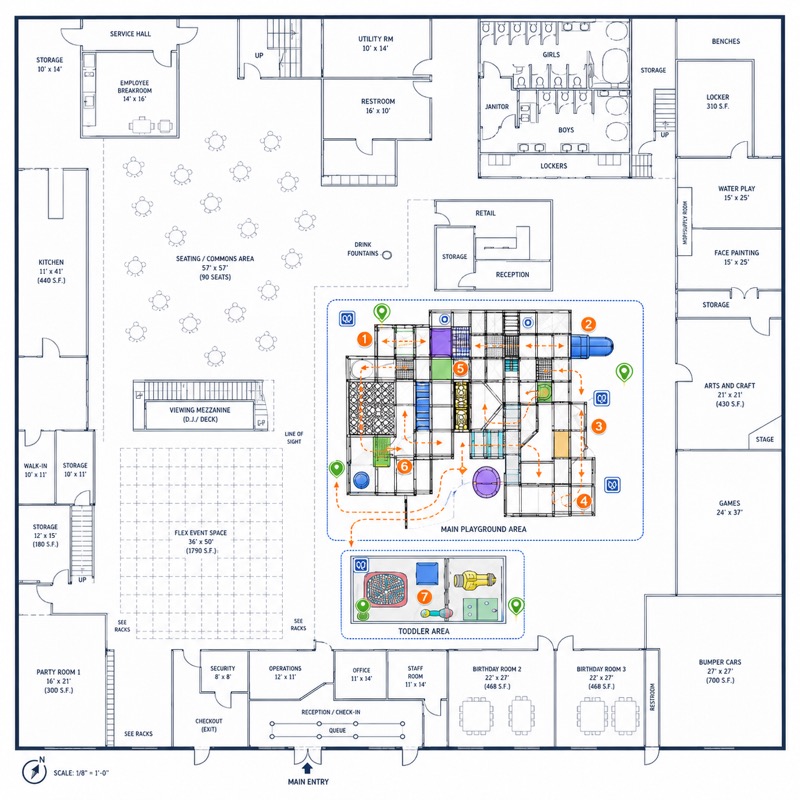
A good commercial indoor playground structure starts with the building and the business model. Ceiling height matters. Column locations matter. Emergency exits matter. Parent seating matters. Party rooms matter. Washrooms, food service, check-in, stroller traffic, cleaning access, and future expansion all matter.
The play structure is usually the largest visual feature in the facility, but it cannot be designed in isolation. It needs to work with everything around it.
For your business, it needs to be the “right” structure. That is where experience matters.
Planning the Right Indoor Play Structure:
The right indoor playground structures are designed around:
- Age range
- Ceiling height
- Building footprint
- Capacity goals
- Parent sightlines
- Staff supervision
- Traffic flow
- Birthday party use
- Toddler separation
- Maintenance access
- Safety standards
- Long-term operating value

Built for the Real World of Indoor Play
The right commercial indoor playground structure has to survive far more than an excited child on opening day.
It has to handle birthday parties, school breaks, weekend crowds, toddlers who climb the wrong way, older kids who test every corner, parents watching from a distance, staff trying to supervise, and owners who need the attraction to keep earning long after the ribbon cutting is over.
That is why a playground structure should never be treated as a truckload of decks, posts, slides, and activities. It is the physical engine of the business. Done well, it creates movement, challenge, capacity, visual appeal, and repeat play. Done poorly, it becomes a maintenance problem, a supervision headache, or an expensive reminder that the cheapest quote was not really the cheapest option.
SMART Playgrounds designs commercial indoor playground equipment for play cafés, indoor party centers, children’s entertainment centers, family entertainment centers, and indoor play businesses across Canada and the United States.
The goal is simple: build a structure that fits the space, serves the guest, supports the operator, and gives families a reason to come back.
A Blueprint for Better Play & Long Term Return
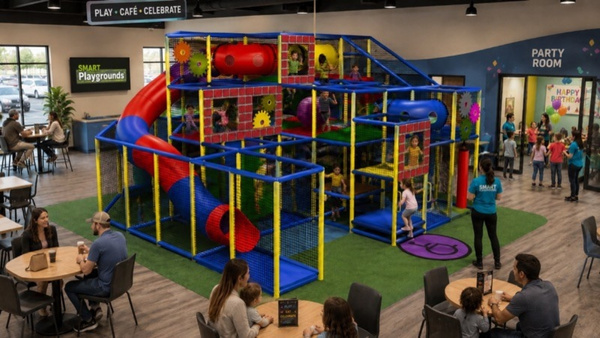
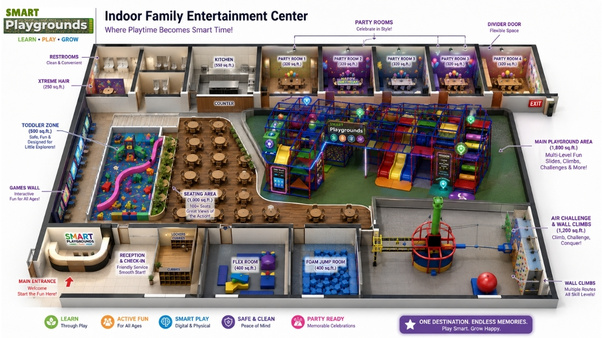
Before the actual design of an indoor playground structure, SMART looks at the invisible decisions that shape long-term success: building constraints, parent visibility, party flow, cleaning access, amenity placement, and future expansion. These details may not look exciting in a rendering, but they are often the difference between a playground that simply fits the room and a playground that actually supports the business.

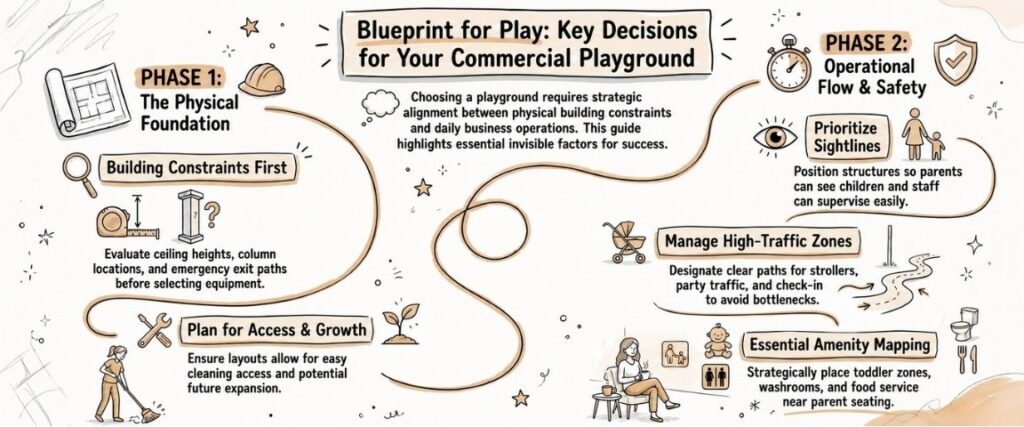
Building First
Ceiling heights, columns, exits, and building layout should guide the structure—not the other way around.
Clear Sightlines
Parents and staff need practical visibility into the play area, especially during busy periods.
Traffic Flow
Party groups, strollers, check-in, food service, and open play traffic need room to move without bottlenecks.
Future Access
Good planning leaves room for cleaning, maintenance, upgrades, and possible future expansion.
Designed for Your Space & Play Value
A bigger structure is not automatically a better structure.
Children do not return because the quote you received had more decks and extremely large ball pool. They return because the playground gives them variety, challenge, discovery, and reward. They want to climb, crawl, race, squeeze, slide, balance, hide, chase, explore, and invent their own games inside the space.
Good play value (play-a-bility) comes from how those elements are arranged. A slide at the end of a strong climbing route has more value than a slide placed randomly because it looked good in a rendering. A bridge that creates movement across the structure has more value than a decorative piece at that front, that leads nowhere. A toddler zone that feels protected, visible, and age-appropriate has more value than a miniature copy of the big-kid area.
This is one of the biggest differences between a commercial playground structure and a collection of play components. The structure needs rhythm. It needs flow. It needs enough challenge to keep children engaged without creating chaos for parents and staff.
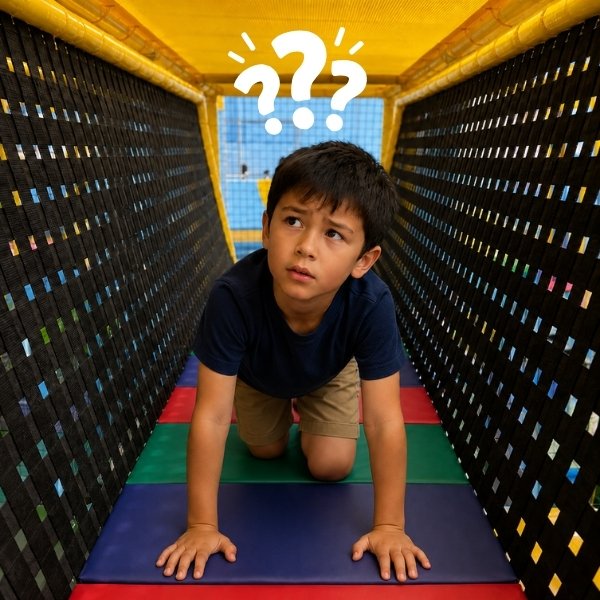
Built for Daily Commercial Use
Indoor playground equipment lives a hard life.
They are climbed on, kicked, pushed, spilled on, cleaned, patched, inspected, and used every day by children who have no interest in treating the equipment gently. That is exactly why commercial durability matters.
Owners need to think beyond the opening-day render. What happens after six months? After two years? Are the wear points accessible? Can the structure be cleaned? Are materials appropriate for commercial use? Can replacement parts be sourced? Is the netting tight? Are pads properly fitted?
Have safety concerns been addressed? Head gaps, pinch points and possible areas of entrapment. These can lead to severe liability repercussions. Poor design items include awkward gaps, poor sightlines, or areas where staff cannot easily reach a child.
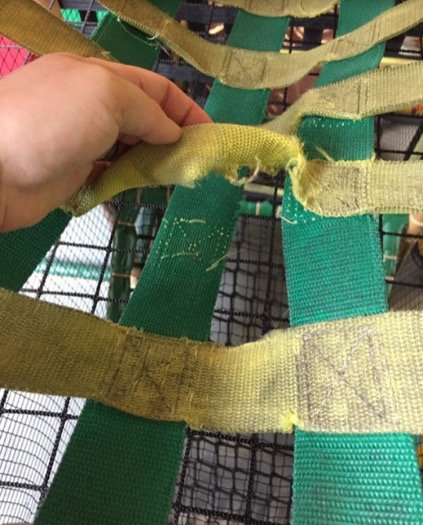
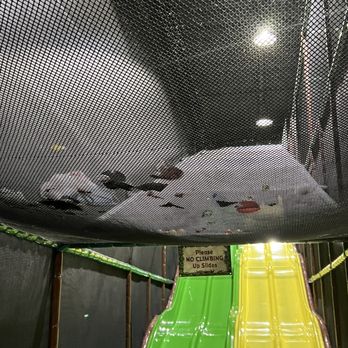
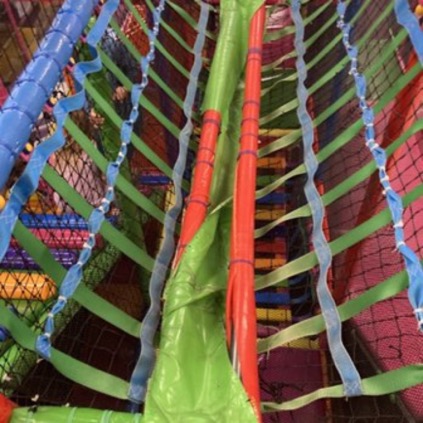
A cheaper structure can become expensive very quickly when maintenance, downtime, repairs, poor fit, and guest complaints start showing up after opening. The structure should be designed and built for the business to operate efficiently, safely and with minimal maintenance concern.
Designed for Operators, Parents, and Kids
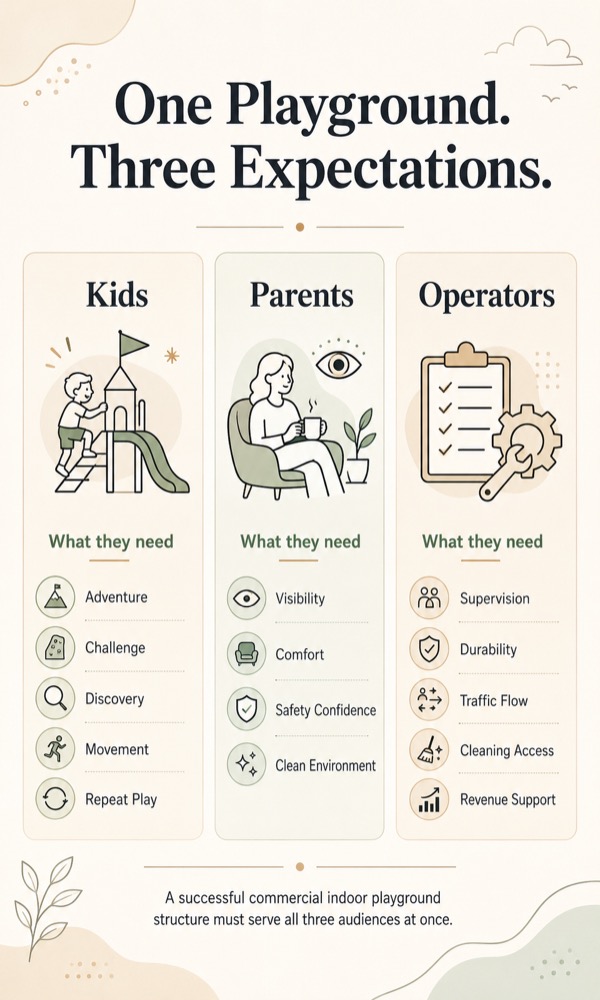
Kids may be the reason the playground exists, but adults decide whether the business works.
Parents need to feel comfortable. They need to see enough of the play area to relax. They need to understand where younger children belong and where older children can challenge themselves. They need seating, sightlines, clean surroundings, and confidence that the facility is well designed.
Staff need clear supervision points, manageable entry and exit flow, and reasonable access for cleaning and assistance. Owners need the structure to support birthday parties, open play, memberships, events, and repeat visits.
That means design decisions should consider:
- visibility from seating areas
- clear entry and exit points
- supervision zones
- cleaning access
- durable materials
- replacement parts
- traffic bottlenecks
- age separation
- party group flow
- emergency access
- equipment wear points
A playground that is hard to supervise, hard to clean, or hard to maintain becomes an operating problem.
If the kids love it but parents hate the visibility, there is a problem.
If parents like it but kids get bored after one visit, there is a problem.
If everyone likes it but staff cannot manage it, there is definitely a problem.
A great indoor playground structure balances all three groups.
Theming That Supports the Business
Theming can make an indoor play-ground more memorable, more marketable, and more valuable — but only when it is used with some discipline.
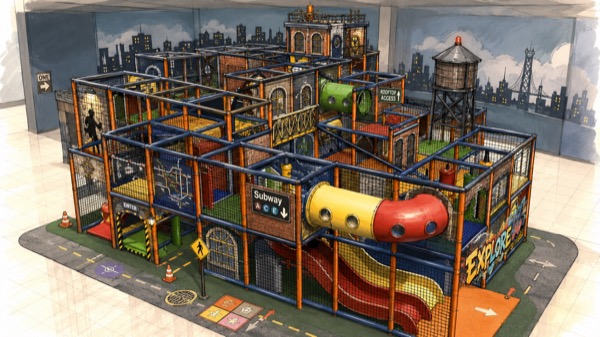
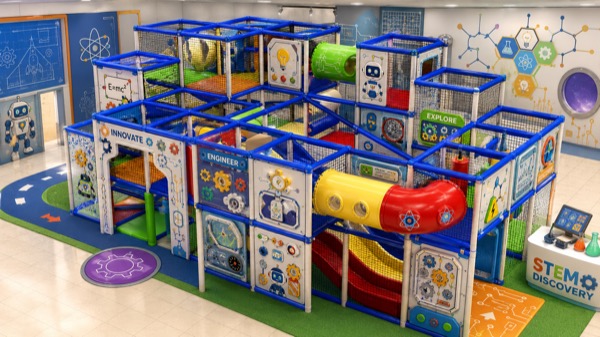
Theming can be expensive, especially if left to the whim of the playground company. A castle, jungle, ocean, space, city, or adventure theme should help the playground tell a story. It should create visual landmarks, photo moments, branded party opportunities, and a stronger first impression. It should not turn the entire facility into visual noise.
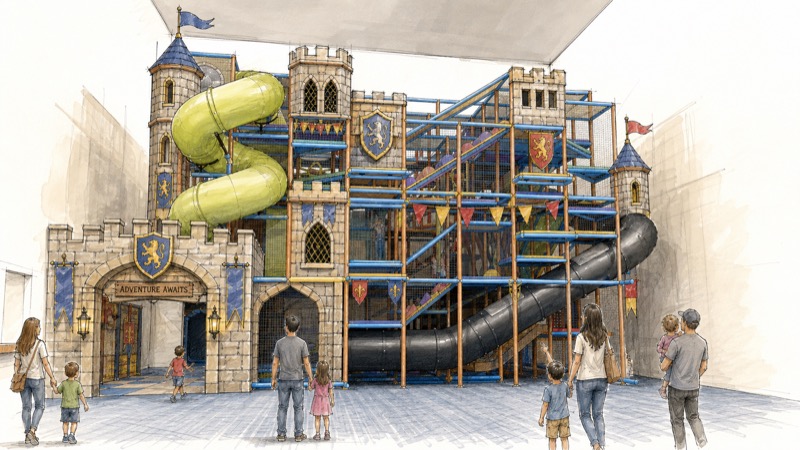
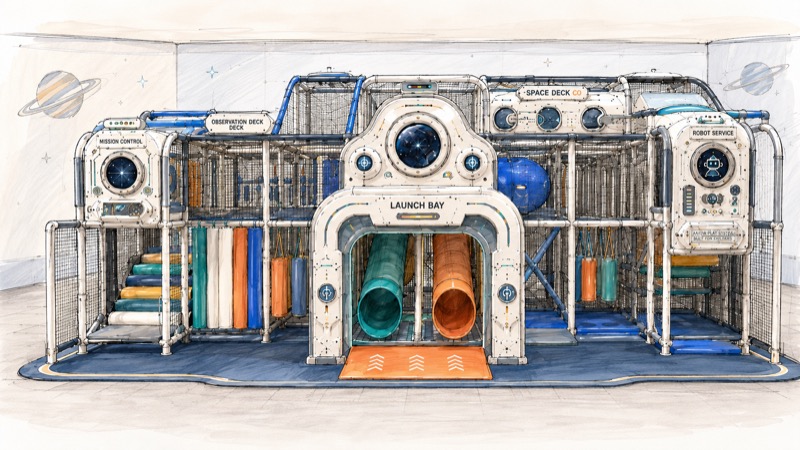
Good theming supports the structure. It helps children understand the world they are entering and gives parents something to talk about. It can also help to differentiate from the location over there, and make the facility easier to promote online, especially when the design includes strong visual anchors near entrances, slides, towers, party rooms, or toddler zones.
However, to offer your budget some reprise, the goal is not to decorate every inch.
The goal is to create an experience, a journey, a platform the business can leverage to push the story and create memories. A cool theme on it’s own, gets a few ‘wow-factor’ visits, but it’s the memories you can help to create that builds and secures repeat visits.
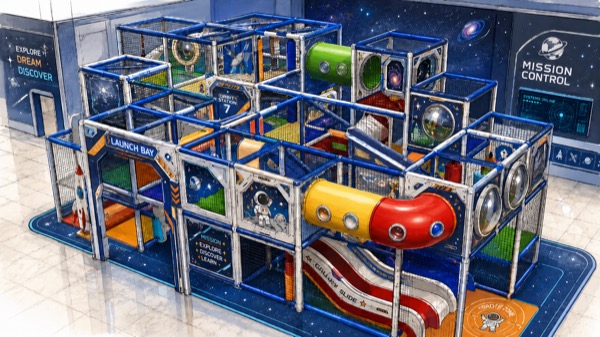
The Activity Layer: Giving the Structure a Second Life
A modern indoor playground structure can do more than support open play.
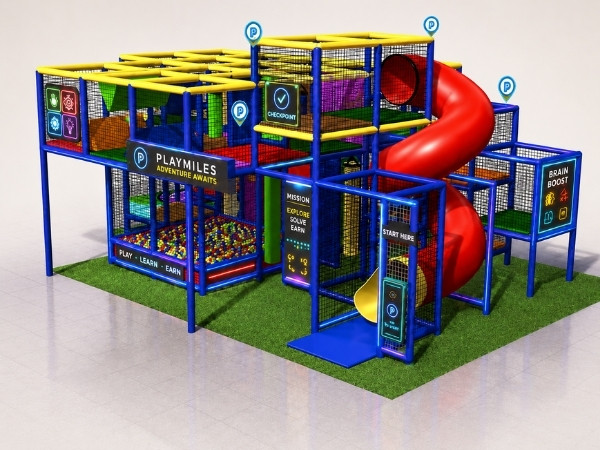
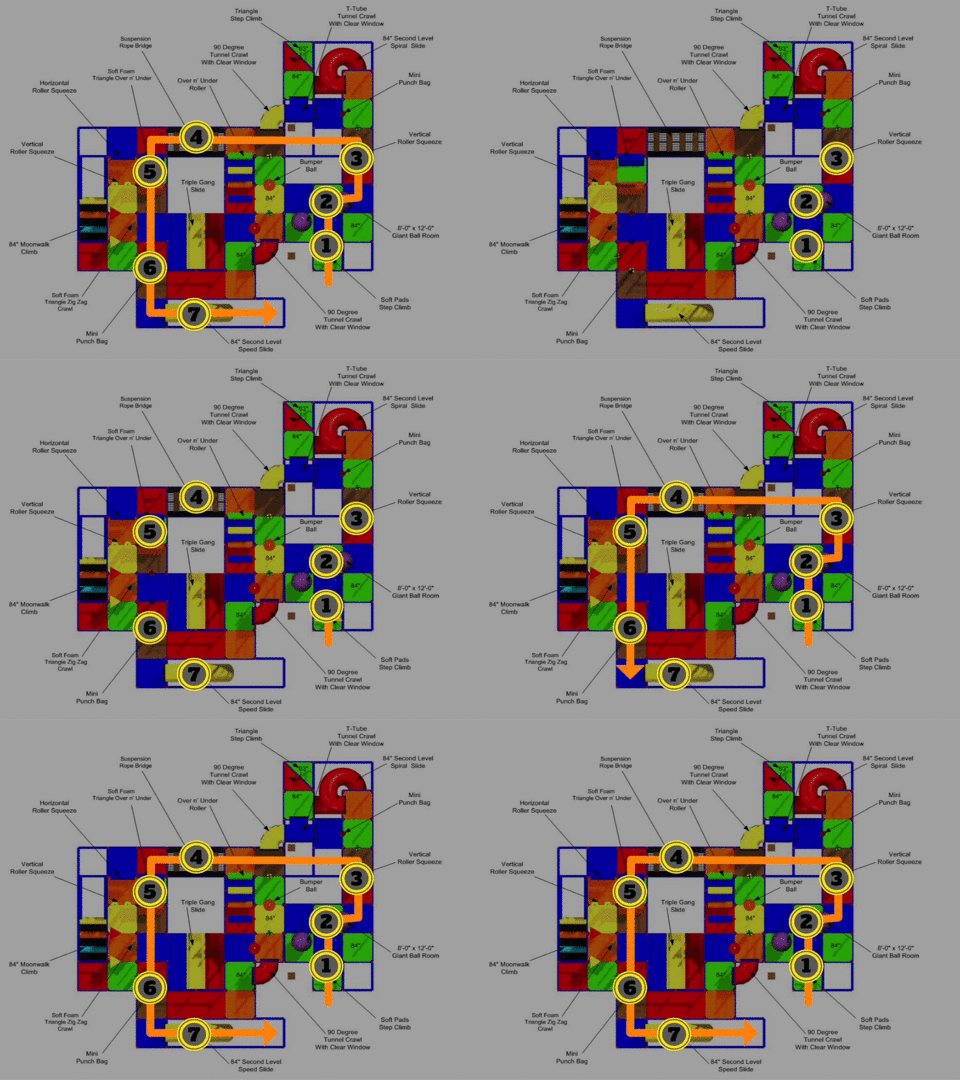
With the right planning, it can become the physical stage for quests, challenges, activity paths, birthday upgrades, weekday programming, school-break events, family nights, and PlayMiles-style engagement.
This is the SMART Activity Layer.
Instead of treating the playground as a static attraction, the Activity Layer gives children new reasons to move through the structure with purpose. One visit may be about free play. Another may be about completing a challenge path. Another may connect to a quest, achievement, badge, or themed event.
For operators, this matters because repeat visits are not automatic. Families need new reasons to return. The Activity Layer helps turn the same physical structure into a more flexible programming tool.
That is where SMART Playgrounds is moving the conversation beyond equipment and into long-term guest engagement.
As the business aperture widens, the process of designing the Right structure for your long term project goals really begins to emerge.
Start With the Structure — But Plan the Whole Facility


If you are planning an indoor playground structure, start with the business questions first.
What age group are you serving? How many party rooms do you need? How much parent seating is required? Will food service matter? Is the playground the main attraction or part of a larger entertainment mix? Do you need toddler separation? Will the facility support weekday programming? Is there room to grow?
Once those questions are clear, the structure can be designed with purpose.
SMART Playgrounds can help you plan a commercial indoor playground structure that fits the building, supports the business model, and creates a better experience for kids, parents, and operators.