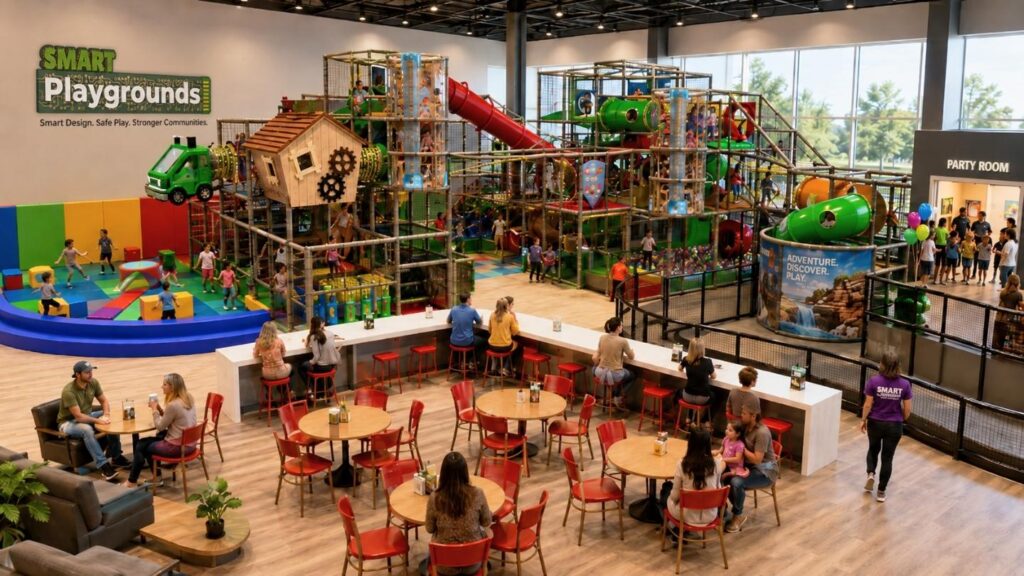
SMART Playgrounds is your North American choice for innovative design, quality materials, ASTM safety compliance, and professional on-site installation, from a combined 80+ years industry experience.
With completed projects across 24 countries, turn your idea from dream into a complete project plan, funded, open for business.
Market analysis, business planning, location, facility design, floor plans, project management and installation.
Indoor playgrounds are still the #number one attraction for children’s entertainment centers. Young families, birthday parties, school groups, toddler zones with mommy and me programs, busy weekends and fun seasonal opportunities.
But the market has, and continues to change.
Kids are exposed to more entertainment choices. Parents expect more value. Operators need more than a structure that looks good on opening day. They need a play experience that can create repeat visits, birthday upgrades, weekday programming, memberships, and stronger family engagement.
That experience overall, comes from your entire facility/service provided. However, when it come to the essence of initial decision interest, the indoor playground stands front and center. You want it to start with the ‘nag-factor’ – kids just can’t get enough of the fun your place provides.
That’s what we call the “activity layer”.
The Activity Layer is the mix of components, events and activities that make up the ‘Play-a-bility’ of the play structure. Climbs, crawls, slides, punch bags, trolley rides and more. The kinds and amounts of activities, will determine how much fun your playground is (as well as the price of that playground).
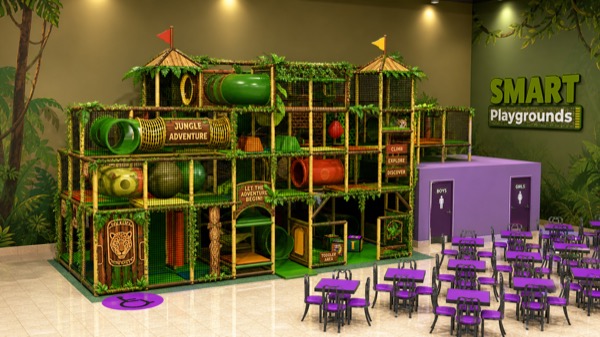
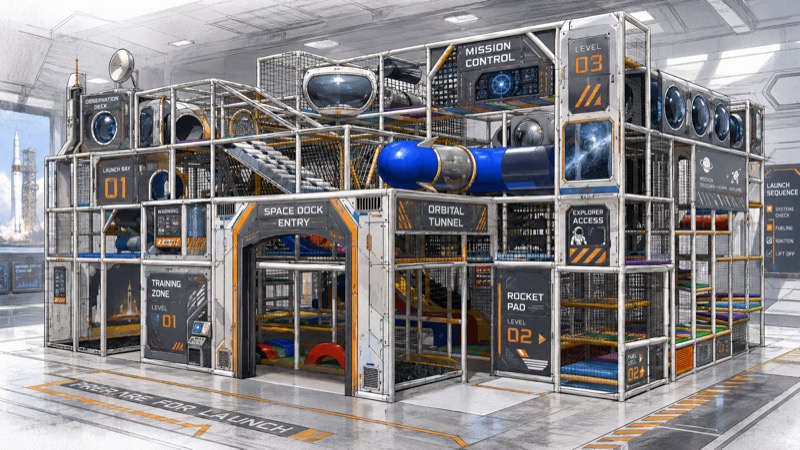
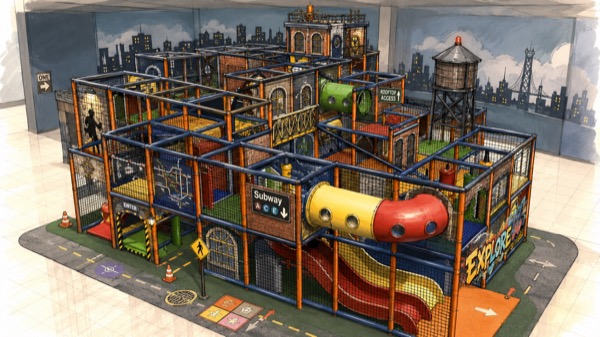
Although somewhat diminished by the sheer energy and enthusiasm of 4-9 year olds, the old adage of ‘been there – done that’ can eventually creep into your play structure, especially for smaller footprints and/or the level restrictions imposed by lower ceiling heights.
As kids grow and evolve, so too does their need for challenge and stimulation.
As kids grow older and enter that TWEEN age group of 9 to 12 year olds, new social forces including access to always-on entertainment, mobile phones and new entertainment options (VR, AR, XR, ubiqutous nature of video games, etc), our kids are literally pummelled with options. Many of which (in this authors estimation) are ripping away the innocence of youth, resulting in kids growing up faster than ever.
Within this new gaming paradigm, traditional indoor play, or soft modular playgrounds, jungle gym, or commercial indoor play structures, all have one thing in common, they are best suited for younger children, ages 4 to 8 years.
From a ‘multi-purpose’ play strategy, your indoor playground design can provide a much broader entertainment experience, with a fun combination of physical play, unstructured and structured, age appropriate opportunities and challenges. This playground equipment strategy best maximizes your budget across a larger demographic, and helps to position your party center business as a healthy, activity member of the community.
” Like other attractions there needs to be a consideration for how to maximize the return on your indoor playground investment. For SMART Playgrounds, that means paid guest traffic –
and lots of it…”
This is accomplished with purposeful design.
As you may know, most children entertainment centers generate 70-80% of revenues from Friday after school to 6pm on Sunday evening, leaving a huge amount of available weekly time to really feed the bottom line.
To attract repeat, paying customers – outside of the traditional weekend party business, a well rounded indoor play experience should provide opportunities for both unstructured and structured play.
These two different, but complimentary play modalities provide the SMART Playground developer the ability to offer various weekday programs and older tween content from a structured play program, purposefully designed to attract traffic outside of the busy, open play unstructured weekend hours.
This includes the opportunity to develop and market premium party packages, group events and exciting, playful learning field trips for school groups.
Most party centers have an abundance of unstructured play, including open play, climbing, sliding, and creative arts. Kids are able to exercise a full range of unstructured qualities, through a sense of playful freedom, in a pressure-free environment.
Structured play however, is synonymous with goal-oriented play and primarily utilizes logic to systematically solve problems to reach a particular goal, like playing board games, video games and organized sports like soccer and others.
We’re really talking about playground design for a new entertainment paradigm. A combination of traditional multi-level indoor equipment along with active, mindful structured play that expands and extends your party center marketing across a wider range of kids and their parents, plus unique play and party opportunities for tweens, groups, teams and corporate events (if desired).
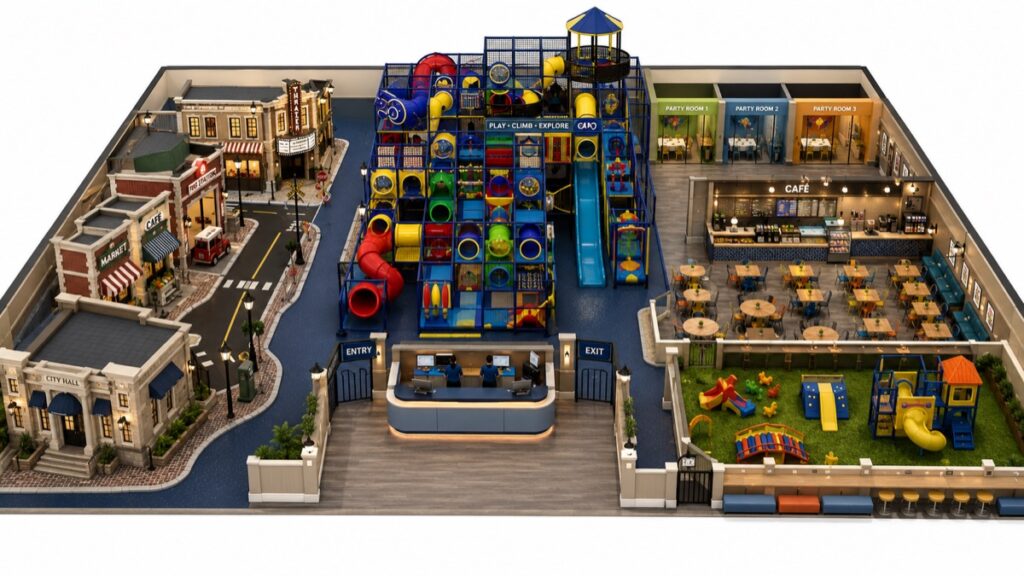
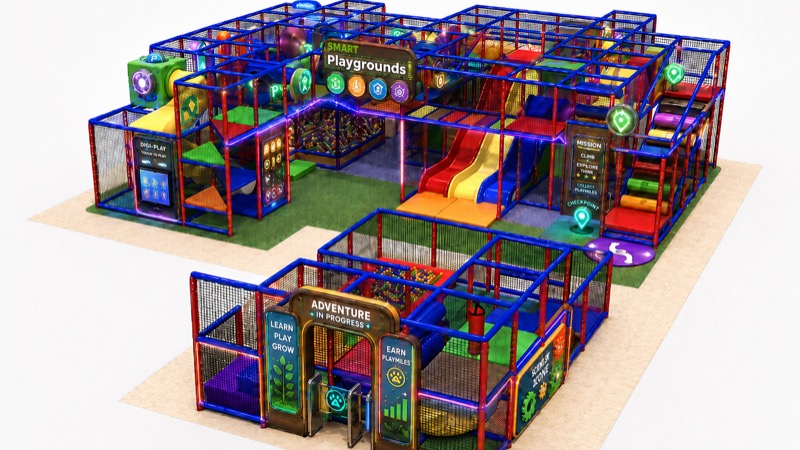
The Activity Layer is the planned experience that sits on top of the physical playground structure. It is transparent to the guest, until they become aware of it, through a paid event, program, party or adventure quest.
It is a dynamic playground design, where activity layer may include simple self-guided activity markers, challenge routes, scavenger hunts, skill stations, party missions, seasonal quests, team challenges, collectible rewards, or Gamification integration.
The structure remains the stage. The Activity Layer becomes the game.
For kids, this adds purpose to movement. For parents, it adds perceived value. For operators, it creates programming tools that can support repeat visits, memberships, events, parties, and weekday traffic.
This is the difference between a playground that children simply use and a playground they can keep discovering and evolving with.
This also matters as children get older. Traditional indoor playgrounds are often strongest with younger children, but families frequently include siblings across multiple age groups. A well-planned Activity Layer can extend the useful life of the playground by adding challenge, strategy, and discovery that appeal to older children without making the environment inappropriate for younger guests.
That is where the SMART Activity Layer becomes especially valuable. It gives younger children more ways to explore, older children more purpose, parents more perceived value, and operators more ways to keep the experience fresh. This also provides a natural path to new services the facility can provide, during those slower weekdays and early evenings, which are typically under-utilized.
The goal is not to make the playground harder to operate. The goal is to make it more useful, more engaging, and more valuable.
Open play will always be the foundation of most indoor playground businesses.
But open play alone can become difficult to market after the first few years. The Activity Layer gives operators more ways to use the same physical space through playful adventures and missions, school-break challenges, family night events, team quests, seasonal campaigns, toddler discovery paths, parent-child activities, and membership reward programs.
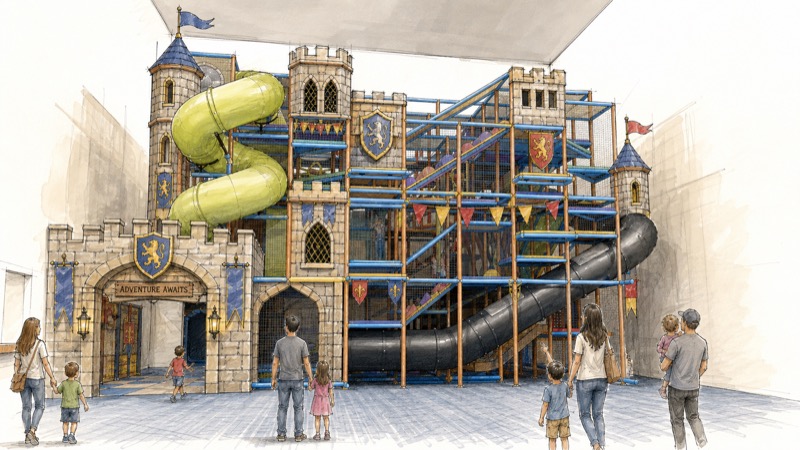
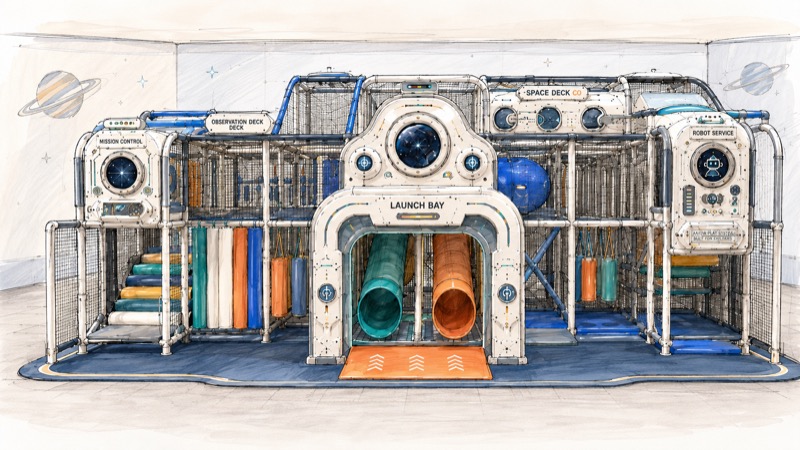
This should not be added as an afterthought.
When planned early, the Activity Layer can influence how activity zones are placed, where markers or missions can be located, how children move through the structure, how birthday groups are managed, and how staff explain the experience to guests.
When planned early, the Activity Layer can support:
The Activity Layer can influence how activity zones are placed, where markers or missions can be located, how children move through the structure, how birthday groups are managed, and how staff explain the experience to guests.That planning can support stronger party formats, more interesting membership programs, repeatable weekday events, seasonal promotions, school and group visits, parent-child challenges, and PlayMiles quests.
The smartest playgrounds are not just designed for opening day. They are designed for what the operator can do with them month after month.
The Activity Layer is not about replacing proven indoor playground design. It’s about making that design work harder. Whether you are planning a new indoor playground or looking for ways to make an existing facility more engaging, SMART Playgrounds can help you design a better play experience.
Start with the structure.
Add the activity strategy.
Build a playground families want to visit again.